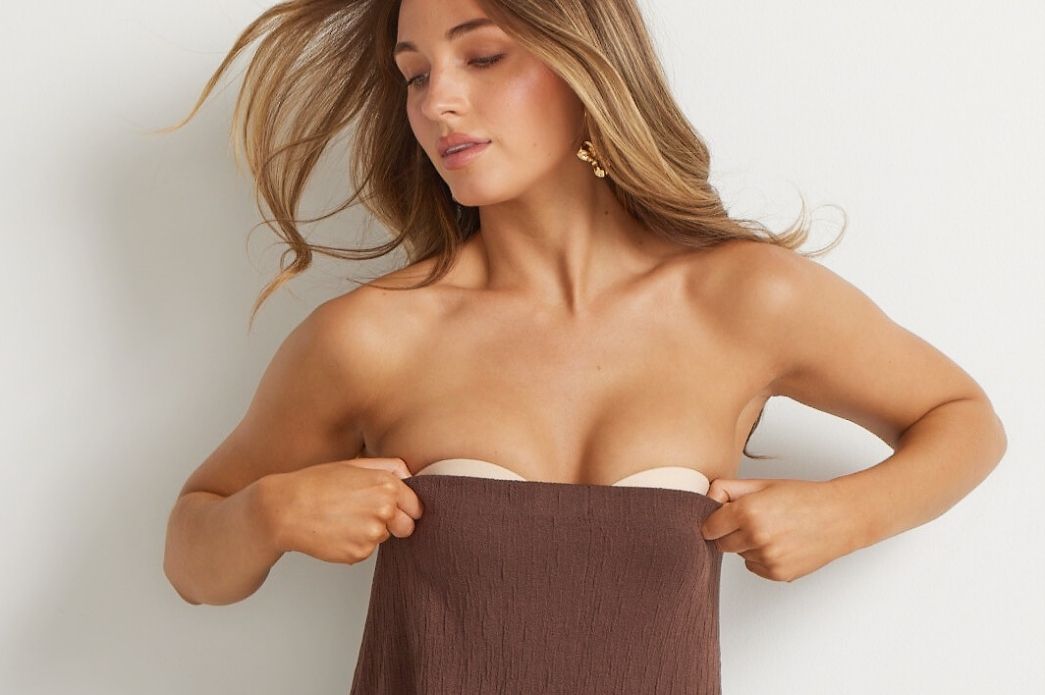


The truth is, many women are wearing the wrong bra size. Studies suggest up to 80% of us are and the signs are usually hiding in plain sight. A bra that fits correctly should disappear into your day. You shouldn’t think about it. You shouldn’t adjust it, tug it, loosen it or be ready to take it off by midday. When the fit is right, everything else follows.
Here is how to tell if your bra size is working against you and what to do about it:
1. The Band Rides Up at the Back
This is one of the most frequent bra fit problems and one of the clearest signals that your band size is too large. The band should sit horizontally across your back, parallel to the floor. If it rides up toward your shoulder blades, the band is not providing any meaningful support. It is also placing all the weight on your straps, which is exactly where it should not be.
What the right fit looks like: The band sits firmly and flat across your back. You should be able to slide two fingers underneath it, but no more.
2. The Straps Dig In or Fall Off Your Shoulders
Bra straps that dig into your shoulders are a sign that your straps are doing the work your band should be doing. This leads to indentation marks, shoulder pain and a bra that shifts constantly throughout the day. Straps that fall off suggest either the wrong cup shape for your breast position, straps set too wide, or a band that is too large.
What the right fit looks like: Adjust your straps so they sit firmly without pulling. If you have adjusted them fully and they still dig in, your band size is likely too large. Try sizing down in the band.
3. The Underwire Sits on Breast Tissue
The underwire should sit completely flat against your ribcage, encircling your breast tissue fully. If the wire is sitting on top of breast tissue, poking into the side of your breast or lifting away from your sternum, your cup size is too small. This is also one of the most common causes of bra-related discomfort and is often mistaken for an underwire quality issue, when it is actually a sizing issue.
What the right fit looks like: The centre gore should lie flat against your sternum. If it is floating away from your chest, size up in the cup.
4. The Cups Wrinkle or Gap
Wrinkling or gaping fabric in the cup means there is more space than breast tissue. This is a sign your cup size is too large. This is particularly visible in t-shirt bras and moulded cup styles, where the smooth finish of the cup is designed to disappear under fabric. If the cup is not filled, it creates a visible line or hollow under clothing.
What the right fit looks like: Size down in the cup. You may also need to consider cup shape. Not all cup styles suit all breast shapes.
5. You Have Breast Spillage or a Double Bust Effect
If your breast tissue is spilling over the top, sides or bottom of the cup, your cup size is too small. This is often called a double bust effect and is one of the most recognisable signs of an incorrect bra size. It is not about the size of your breasts. It is about the cup not being engineered to contain and support your full shape.
What the right fit looks like: Size up in the cup. If you are already in a larger cup size and still experiencing spillage, consider styles with fuller coverage or a deeper cup depth.
6. The Bra Feels Uncomfortable by Midday
A well-fitted bra should be wearable all day without needing to adjust, remove or loosen it. If you are counting down the hours until you can take it off, something is not right. Discomfort can be caused by a band that is too tight or too loose, underwire in the wrong position or a style that does not match your breast type
What the right fit looks like: Discomfort is data. Pay attention to exactly where the discomfort is happening. That will point you toward the specific fit issue.
7. Your Bra Moves Around During the Day
A correctly fitted bra stays in place. The band should not shift, the cups should not rotate and the underwire should not move. If you are constantly repositioning your bra, the band is too large.
What the right fit looks like: Support comes primarily from the band, not the straps. A band that is the right size will anchor the bra in place and carry the weight of the bust without assistance from the shoulders.
Your bra size is not fixed. It changes with weight fluctuation, hormonal shifts, pregnancy, breastfeeding, menopause and age. Many women are wearing a size measured years ago that no longer reflects their current shape. A professional bra fitting, whether in-store or using a precise at-home measuring method, should be revisited every one to two years or any time your body changes.
At Fine Lines, fit is the foundation of everything we design. Every style is engineered with support structure, fabric performance and fit precision at the centre of its construction. Because confidence is not something a bra gives you. It is something that happens when you stop thinking about your bra entirely.
Ready to find the Fine Lines fit of your life?